How to Create a Weekly Learning Plan That Actually Works
Learn how to build a simple weekly learning plan that helps you stay focused, make steady progress, and fit learning into a busy schedule.
Table of contents
A good learning plan does not need to be complicated. It needs to tell you what you are learning, why it matters, when you will work on it, and how you will know whether you are making progress.
A weekly learning plan is useful because it turns a broad goal such as “learn Excel,” “improve English,” or “prepare for an interview” into a small set of actions you can realistically complete in seven days. Instead of depending on motivation, you create a repeatable routine.

Start With One Clear Learning Goal
Trying to improve several unrelated skills at the same time often makes planning harder. Begin by choosing one main learning goal for the week.
A useful goal is specific enough that you can recognize progress. “Learn coding” is too broad. “Understand React state and build one small practice component” is easier to plan.
You can use this simple format:
Goal: What do I want to understand or be able to do by the end of the week?
For example:
Finish two lessons from a course and write short notes.
Practice 30 new vocabulary words and use them in sentences.
Learn three Excel formulas and apply them in a sample worksheet.
Review one interview topic and solve five related questions.
Keep the goal realistic. Your weekly plan should create momentum, not become another source of pressure.
Break the Goal Into Small Learning Tasks
Once you know the goal, divide it into smaller tasks. Each task should be clear enough that you can sit down and begin without deciding what to do next.
Separate Learning From Practice
Most skills need both input and application. Watching a tutorial or reading a chapter can help you understand a topic, but practice helps you check whether you can actually use it.
A balanced week might include:
Learn: Watch a lesson, read a chapter, or study notes.
Practice: Solve questions, build something, write, speak, or apply the concept.
Review: Revisit mistakes and key ideas.
Test: Explain the topic from memory or complete a small challenge.
This structure works for many subjects because it prevents your plan from becoming a list of videos to consume.
Decide How Much Time You Really Have
A weekly plan should fit your existing schedule rather than compete with it.
Look at your week and identify the periods when focused learning is realistic. You may have 30 minutes before work, an hour in the evening, or a longer block on the weekend.
Do not plan every free minute. Leave some flexibility for work, family responsibilities, travel, or low-energy days.
Use Short, Focused Sessions
You do not always need a two-hour study block. A focused 25- to 45-minute session can be enough for one clearly defined task.
For example, instead of writing “Study English — 2 hours,” you could plan:
Monday: 30 minutes of vocabulary review
Wednesday: 40 minutes of reading practice
Friday: 30 minutes of grammar questions
Sunday: 30-minute weekly review
The smaller sessions are easier to start and easier to move if your schedule changes.
Give Every Session a Specific Purpose
A calendar entry such as “study” is vague. A stronger plan tells you exactly what to do.
Compare these two approaches:
Study React
and
Read about useEffect, build one small example, and write three notes about when it runs.
The second version removes uncertainty. When the session begins, you already know the expected outcome.
Plan Around Outcomes, Not Just Time
Time spent is useful to track, but it should not be your only measure of progress.
At the end of a session, ask:
What did I complete, understand, or practice?
Useful outcomes might include:
One finished lesson.
Ten solved practice questions.
One page of summarized notes.
One small project feature.
A five-minute explanation without looking at notes.
This makes progress easier to see.
Build a Simple Weekly Learning Schedule
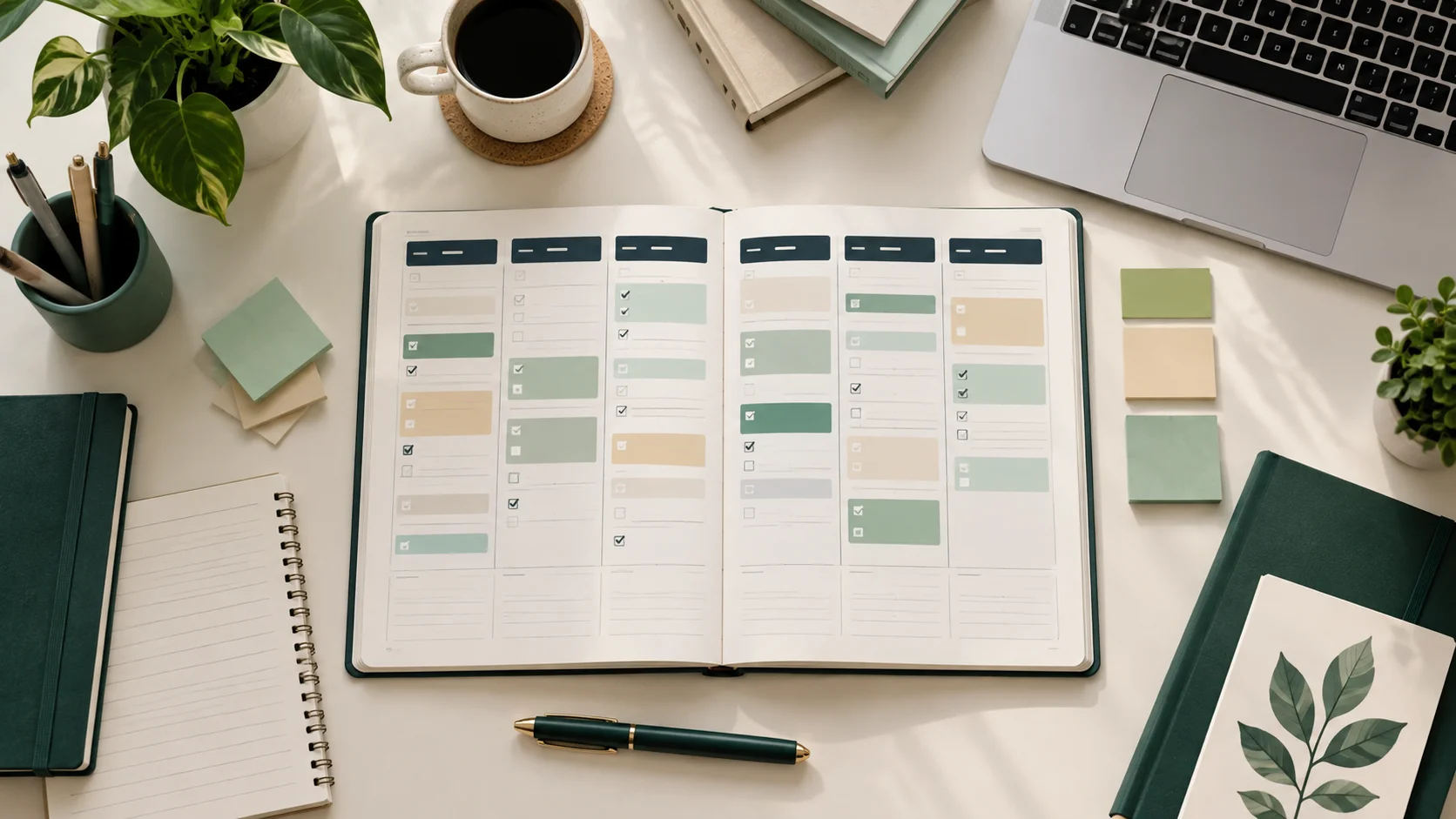
You do not need a complicated planner. A basic structure with five fields is enough:
Day
Topic
Task
Time
Result
Here is a simple example for someone learning Excel:
Monday — SUMIF basics
Watch a lesson and recreate two examples — 30 minutes
Tuesday — Practice
Build a small expense table using SUMIF — 40 minutes
Thursday — COUNTIF
Learn the formula and test three examples — 30 minutes
Saturday — Mini project
Combine SUMIF and COUNTIF in one worksheet — 60 minutes
Sunday — Review
Recreate the formulas without notes and record questions — 30 minutes
Notice that the week includes learning, practice, application, and review.
Make Your Plan Flexible
Missing one session should not ruin the entire week.
Instead of treating your schedule as a strict timetable, think of it as a roadmap. If Tuesday becomes unexpectedly busy, move that task to Wednesday or the weekend.
One useful approach is to identify three levels of priority:
Must do: The most important task for the week.
Should do: Useful tasks that support the main goal.
Bonus: Optional practice if you have extra time.
This prevents an imperfect week from becoming an abandoned plan.
Track What You Actually Learned
Checking a task off is satisfying, but a learning plan becomes more useful when you record what happened.
After each session, write one or two lines:
What did I learn?
What was difficult?
What should I review next?
This can take less than two minutes and gives you useful information for the following week.
Keep a “Next Question” List
During learning, you will often discover something you do not understand. Instead of stopping your entire session to explore every side topic, write the question down.
For example:
Why does this formula return an error?
What is the difference between these two grammar structures?
When should this programming pattern be used?
You can use these questions during your review session or as starting points for the next week.
Review the Week Before Planning the Next One

A weekly review is what turns a schedule into a learning system.
At the end of the week, spend a few minutes looking at what you planned versus what you completed.
Ask yourself:
What did I finish?
What do I understand better now?
Where did I struggle?
Which task took longer than expected?
What should continue next week?
Is my current goal still the right priority?
Do not judge the week only by the number of completed tasks. If one difficult concept became clear, that may be more valuable than completing several easy activities.
Avoid Common Weekly Planning Mistakes
One common mistake is adding too many tasks. A full calendar may look productive, but it can quickly become unrealistic.
Another mistake is consuming information without practicing it. If you are learning a skill, make room to use the skill.
It is also easy to keep changing resources. Starting a new course, book, app, or tutorial every few days can make progress harder to measure. Choose a primary resource for the week and use additional material only when necessary.
Finally, avoid planning the next week without reviewing the previous one. Your actual experience is the best guide for adjusting the amount of work you schedule.
A Simple Formula You Can Reuse Every Week
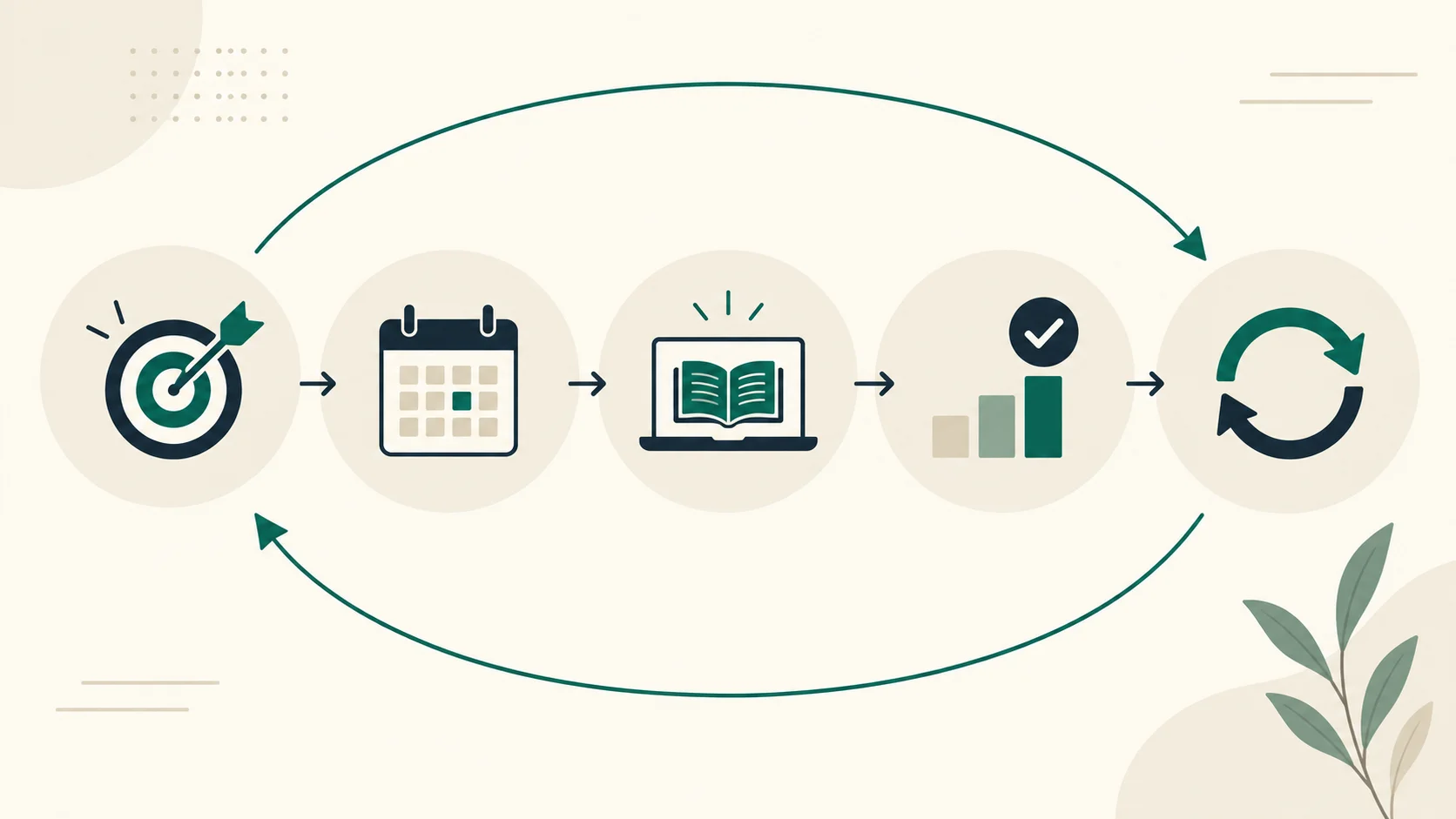
You can build most weekly learning plans around five steps:
Choose one main goal.
Break it into three to five manageable tasks.
Assign each task to a realistic time slot.
Include at least one practice or application session.
Review your progress before planning the next week.
The system is intentionally simple. The easier it is to maintain, the more likely you are to use it consistently.
Start With the Next Seven Days
You do not need to design the perfect study system before you begin.
Choose one skill you want to improve. Decide what meaningful progress would look like seven days from now. Then schedule a few focused sessions and give each session a clear purpose.
At the end of the week, review what worked and adjust the next plan. Over time, your weekly learning plan becomes more than a schedule—it becomes a practical record of how you are developing your skills.
If you use planners, templates, or learning trackers, keep the tool simple enough that planning supports your learning rather than becoming another task to manage.